

Storm Austen brought amber and yellow wind warnings to parts of southern and south-west England on Friday 23 October, with heavy rain on top. The Met Office described it as the first stormy weather in the south of the UK this season and warned that fallen branches and trees could block roads while trees are still in leaf. More wet and windy spells were forecast to follow.
For anyone running vans or HGVs, that is a fair warning of what the next few months can bring. Flooded lanes, crosswinds on exposed roads and debris on the carriageway put drivers and their loads at risk. Getting ahead of winter — batteries, tyres, lights and fluids — also limits downtime. Here is a practical guide for operators and drivers across Somerset, Dorset and the wider South West.
Decide whether the trip needs to happen
The safest storm run is often the one that waits a few hours. Before vehicles leave the yard, check the Met Office forecast and any weather warnings for the whole route, not just the depot.
National Highways advises that if your vehicle is vulnerable in strong winds, you should consider delaying travel until conditions improve. Its list of vulnerable vehicles includes vans, high-sided rigid HGVs, articulated HGVs, tippers and anything towing a trailer. That covers most commercial fleets.
If a delivery can move to the afternoon, once a warning has passed, that is usually the better call.
Flood water: turn around
The Met Office advice is blunt. If the road is flooded, turn around and find another route. Driving through flood water is the number one cause of death during flooding.
Flood water is hard to judge from the cab. You cannot see the depth, the speed of the current, or what is underneath. The Met Office notes that just 30cm of moving water can float a car, and that a small amount of water drawn into an engine can cause severe damage. Water can also hide washed-out road surfaces, open drain covers and debris.
A higher ride height does not make a van or truck safe in flood water, and a stalled HGV in a flooded dip can block a road for hours.
If a driver has gone through standing water, the Highway Code says brakes may be less effective. Test them gently at the first safe opportunity. If they are not fully effective, apply light pressure while driving slowly to help dry them out.
For depots and regular routes, the Environment Agency offers a free flood warning service by text, phone or email for homes and organisations in England. It does not cover surface water or flash flooding, so drivers still need to use their own judgement on the day.
High winds: plan for gusts and debris
Highway Code Rule 232 says high-sided vehicles are most affected by windy weather, particularly on open roads exposed to crosswinds and when passing bridges or gaps in hedges. For HGV and van drivers, that means:
- Slowing down and keeping both hands on the wheel. Gusts can move a vehicle sideways without warning.
- Leaving room on either side of the vehicle to allow for being blown off line.
- Avoiding exposed routes where possible, including high ground and coastal roads.
- Taking extra care on bridges, viaducts and gaps between trees or buildings, where side winds are strongest.
- Watching for fallen trees and debris, especially on rural roads after a storm has passed.
- Giving cyclists, motorcyclists and other vulnerable road users more space, as they are more likely to be blown off course.
Lightly loaded or empty high-sided vehicles and curtainsiders can be more exposed to crosswinds than loaded ones. Think about which vehicles go out on exposed routes when a wind warning is live. National Highways can also close some structures to certain vehicle types during severe weather, so check routes and diversions before setting off.
Checks before setting off in bad weather
A storm is a poor time to find a split wiper blade or a failed marker light. Alongside the usual daily walkaround, pay extra attention to:
- Tyres: tread depth and pressures, including inner duals on HGVs and trailers. Wet roads leave less margin for worn tyres.
- Lights: headlights, marker lights and trailer lighting, all working and clean. Spray reduces visibility for everyone.
- Wipers and washers: blades in good condition and screenwash topped up.
- Load security: loads properly restrained, curtains and straps in good order, and nothing loose on the bed or roof. Wind puts extra force on anything that is not secured.
- Route and timing: check the forecast and travel updates, and allow extra time. Plan where the driver could stop safely if conditions get worse.
- Kit: high-visibility clothing, a torch, warm clothes and a charged phone.
Winter-ready: limit downtime before the next spell
Storm days are when weak batteries, worn tyres and tired wipers show up first. A short winter-ready look on the yard — and a workshop check when you book — helps keep vans and HGVs earning through the colder months.
Worth paying attention to now:
- Batteries: cold mornings are hard on starting. Have batteries tested, not just checked by eye, and look at terminals and connections.
- Tyres: tread and pressures (including duals and trailers). Pressures drop as temperatures fall.
- Lights and wipers: more hours in the dark and spray. Replace split blades; keep screenwash with antifreeze for low temperatures.
- Fluids: coolant level and antifreeze strength, obvious hose leaks, and AdBlue or emissions warnings — do not leave them until next week.
Getting ahead of winter means catching predictable problems before they take a vehicle off the road. When you book a service with us, every booking includes a FREE Winter Health check. Full detail: Get ahead of winter.
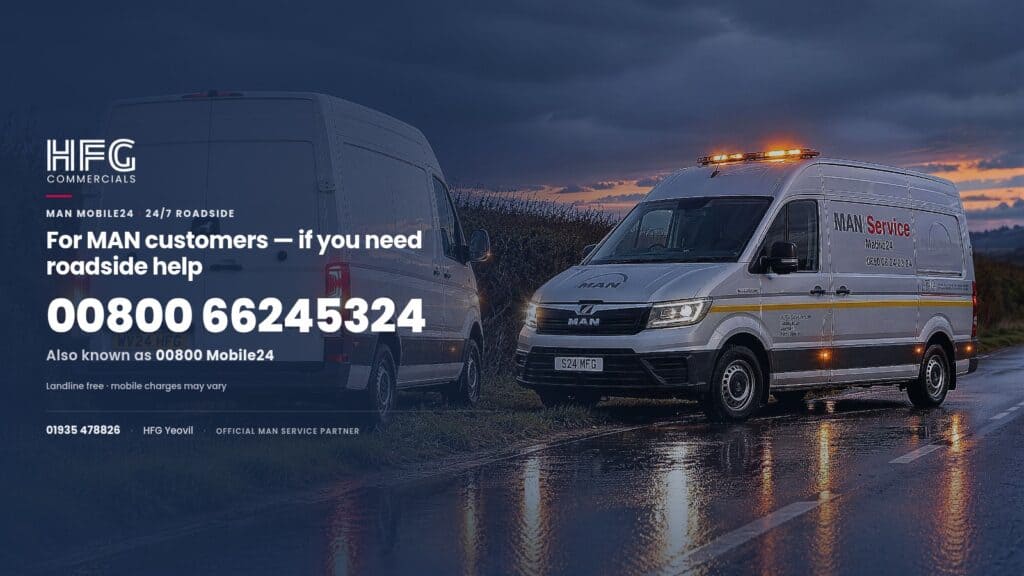
If you are stranded or break down
The Highway Code advice on breakdowns applies just as much in a storm, with extra caution for flood water and falling debris:
- Try to stop in a place of relative safety, such as a lay-by, service area or emergency area.
- Use hazard warning lights if the vehicle is causing an obstruction, and keep sidelights on in the dark or poor visibility.
- On a motorway, if you cannot get out of the vehicle safely, stay in it with your seat belt on and call 999.
- Elsewhere, wear high-visibility clothing and keep well away from moving traffic.
- Do not stand between the vehicle and oncoming traffic.
- Do not wade through flood water to get help or try to move the vehicle out of it.
Once everyone is safe, contact your breakdown provider or the person in your business responsible for recovery.
If you have already driven through flood water
If you have driven through flood water and you are unsure about the vehicle, bring it in and our technicians can inspect it. We do a visual inspection on every job. Water can affect brakes, electrics and the engine in ways that are not obvious from the cab, so a check after an incident is sensible.
As an official MAN Service Partner, we service and repair vans and HGVs of all makes at our Yeovil workshop. If a storm has left a vehicle with a fault, we can help.
Want to get ahead of the next wet spell too? Book a Service — every booking includes a FREE Winter Health check. More: Get ahead of winter.
To book a check, call us on 01935 478826, email enquiries@hfgcommercials.co.uk or visit us at Brympton Way, Lynx West Trading Estate, Yeovil BA20 2HP.